
CARI APA YANG ANDA INGINKAN

Indonesia
- English
- Español
- عربي
- Français
- Indonesia
Pengolahan Air di Tanaman Pengolahan Susu
Waktu:2026-08-05
Pengolahan Air di Tanaman Pengolahan Susu
Perkenalan
Air sangat penting dalam produksi susu. Ini banyak digunakan untuk pengolahan susu, pembersihan CIP, pakan boiler, pendinginan, dan sanitasi peralatan.
Yang dapat diandalkan sistem pengolahan air untuk pabrik pengolahan susu membantu memastikan keamanan pangan, melindungi peralatan, mengurangi biaya, dan menjaga kualitas produk yang konsisten.
Mengapa Air Bersih Penting
Air yang tidak diolah mungkin mengandung padatan tersuspensi, kekerasan, klorin, garam terlarut, dan mikroorganisme. Kontaminan ini dapat mempengaruhi kualitas produk susu dan menyebabkan penskalaan, korosi, atau pengotoran peralatan.
Pengolahan air yang tepat dapat:
- Meningkatkan kualitas dan rasa produk
- Mendukung produksi higienis
- Mencegah penskalaan dan korosi
- Kurangi biaya perawatan
- Memperpanjang umur peralatan
- Membantu memenuhi standar keamanan pangan
Aplikasi Air di Tanaman Susu
Pengolahan Susu
Air murni mendukung persiapan bahan dan kualitas produk yang konsisten.
Pembersihan CIP
Air yang diolah membantu membersihkan tangki, jaringan pipa, dan mengisi peralatan sekaligus mengurangi deposit mineral dan risiko kontaminasi.
Pakan boiler
Air yang dilunakkan atau RO mencegah penumpukan skala dan meningkatkan efisiensi boiler.
Sistem Pendingin
Air yang diolah mengurangi pengotoran dan korosi di menara pendingin dan sistem pendingin.
Proses Perawatan yang Direkomendasikan
Proses pengolahan air susu yang khas adalah:
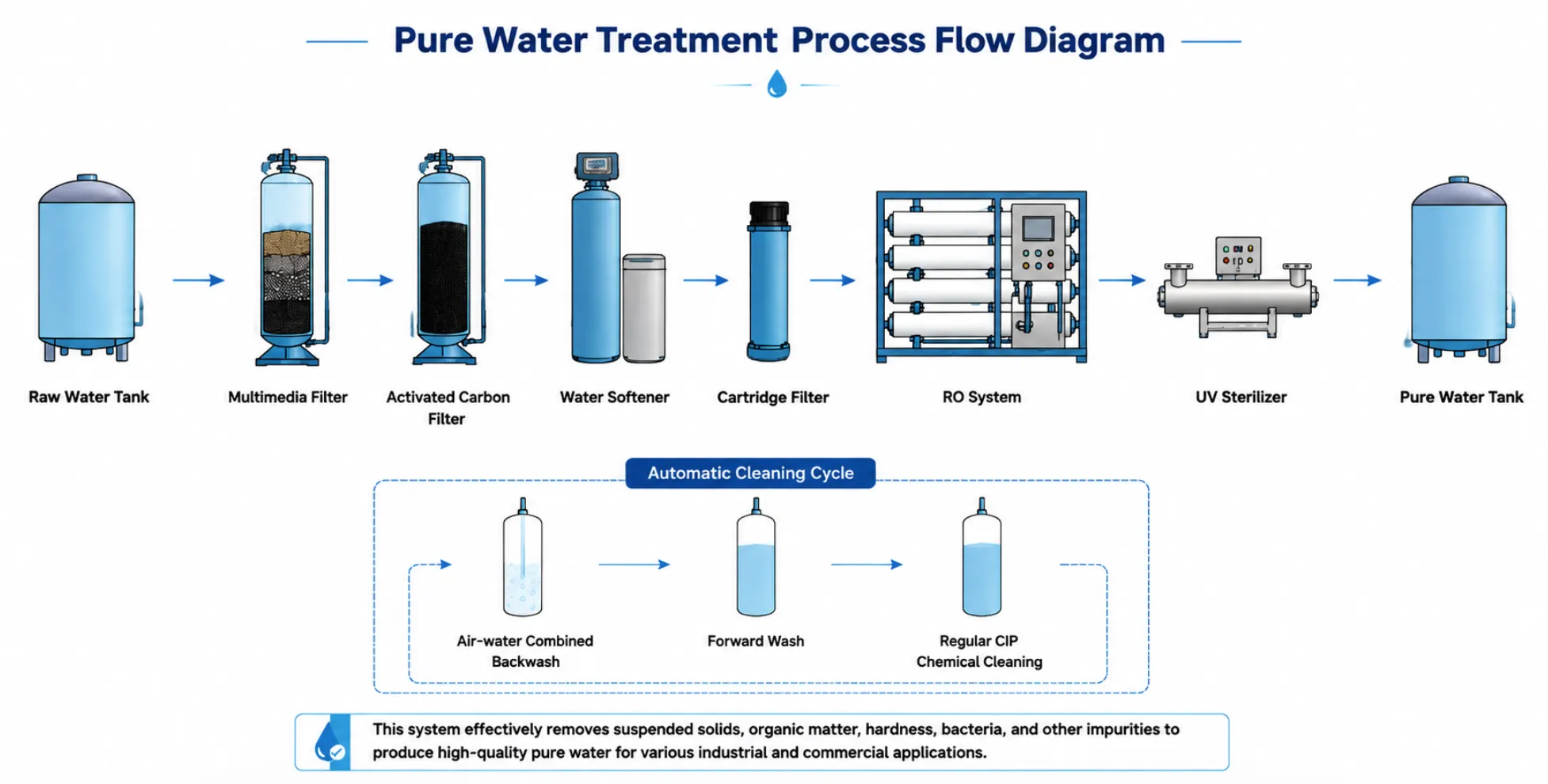
Tangki Air Baku → Filter Multimedia → Filter Karbon Aktif → Pelembut Air → Filter Cartridge → Sistem RO → Sterilizer UV → Tangki Air Murni
Proses akhir harus disesuaikan sesuai dengan kualitas air baku dan aplikasi yang dimaksudkan.
Rekomendasi Equipment
Sistem Reverse Osmosis
Sebuah sistem RO industri untuk pabrik susu menghilangkan garam terlarut, mikroorganisme, dan kotoran lainnya untuk menyediakan air murni yang stabil.
Pelembut Air
Menghilangkan kalsium dan magnesium untuk melindungi boiler, pipa, dan penukar panas dari kerak.
Filter Karbon Aktif
Mengurangi klorin, bau, dan senyawa organik yang dapat mempengaruhi kualitas air.
Sterilizer UV
Mengontrol mikroorganisme tanpa menambahkan bahan kimia, sehingga cocok untuk air pengolahan makanan.
Cara Memilih Sistem yang Tepat
Sebelum memilih sistem, pertimbangkan:
- Sumber air baku
- Laporan kualitas air
- Kapasitas perawatan yang dibutuhkan
- Aplikasi air yang dimaksudkan
- Standar air yang dibutuhkan
- Peraturan keamanan pangan lokal
Desain yang disesuaikan memberikan operasi yang lebih andal dan hemat biaya.
Mengapa Memilih Zhongnuo?
Zhongnuo Water Treatment memproduksi disesuaikan sistem pengolahan air industri untuk pabrik pengolahan susu, termasuk:
- Sistem reverse osmosis
- Sistem ultrafiltrasi
- Pelembut air
- Sistem air ultrapura EDI
- Sistem pengolahan air yang terkontaminasi
Setiap solusi dirancang sesuai dengan kualitas air baku pelanggan, kapasitas yang dibutuhkan, dan kebutuhan produksi.
Pertanyaan yang Sering Diajukan
Pengolahan air apa yang biasa digunakan pada tanaman susu?
RO, filtrasi, pelunakan, dan sterilisasi UV biasanya digunakan. Kombinasi yang tepat tergantung pada sumber air dan aplikasi.
Mengapa air RO digunakan dalam produksi susu?
RO menghilangkan garam dan kotoran terlarut, membantu menjaga kualitas air yang stabil dan melindungi peralatan produksi.
Apakah setiap pabrik susu membutuhkan pelembut air?
Tidak selalu. Pelembut dianjurkan bila air baku memiliki kadar kalsium dan magnesium yang tinggi.
Kesimpulan
Air bersih sangat penting untuk pengolahan susu, pembersihan CIP, umpan boiler, dan pendinginan. Dirancang dengan benar sistem pengolahan air susu meningkatkan keamanan produk, efisiensi produksi, dan keandalan peralatan.
Zhongnuo Water Treatment menyediakan solusi khusus untuk memenuhi persyaratan kualitas dan kapasitas air dari berbagai pabrik pengolahan susu.
Pengolahan Air di Tanaman Pengolahan Susu
Perkenalan
Air sangat penting dalam produksi susu. Ini banyak digunakan untuk pengolahan susu, pembersihan CIP, pakan boiler, pendinginan, dan sanitasi peralatan.
Yang dapat diandalkan sistem pengolahan air untuk pabrik pengolahan susu membantu memastikan keamanan pangan, melindungi peralatan, mengurangi biaya, dan menjaga kualitas produk yang konsisten.
Mengapa Air Bersih Penting
Air yang tidak diolah mungkin mengandung padatan tersuspensi, kekerasan, klorin, garam terlarut, dan mikroorganisme. Kontaminan ini dapat mempengaruhi kualitas produk susu dan menyebabkan penskalaan, korosi, atau pengotoran peralatan.
Pengolahan air yang tepat dapat:
- Meningkatkan kualitas dan rasa produk
- Mendukung produksi higienis
- Mencegah penskalaan dan korosi
- Kurangi biaya perawatan
- Memperpanjang umur peralatan
- Membantu memenuhi standar keamanan pangan
Aplikasi Air di Tanaman Susu
Pengolahan Susu
Air murni mendukung persiapan bahan dan kualitas produk yang konsisten.
Pembersihan CIP
Air yang diolah membantu membersihkan tangki, jaringan pipa, dan mengisi peralatan sekaligus mengurangi deposit mineral dan risiko kontaminasi.
Pakan boiler
Air yang dilunakkan atau RO mencegah penumpukan skala dan meningkatkan efisiensi boiler.
Sistem Pendingin
Air yang diolah mengurangi pengotoran dan korosi di menara pendingin dan sistem pendingin.
Proses Perawatan yang Direkomendasikan
Proses pengolahan air susu yang khas adalah:
Tangki Air Baku → Filter Multimedia → Filter Karbon Aktif → Pelembut Air → Filter Cartridge → Sistem RO → Sterilizer UV → Tangki Air Murni
Proses akhir harus disesuaikan sesuai dengan kualitas air baku dan aplikasi yang dimaksudkan.
Rekomendasi Equipment
Sistem Reverse Osmosis
Sebuah sistem RO industri untuk pabrik susu menghilangkan garam terlarut, mikroorganisme, dan kotoran lainnya untuk menyediakan air murni yang stabil.
Pelembut Air
Menghilangkan kalsium dan magnesium untuk melindungi boiler, pipa, dan penukar panas dari kerak.
Filter Karbon Aktif
Mengurangi klorin, bau, dan senyawa organik yang dapat mempengaruhi kualitas air.
Sterilizer UV
Mengontrol mikroorganisme tanpa menambahkan bahan kimia, sehingga cocok untuk air pengolahan makanan.
Cara Memilih Sistem yang Tepat
Sebelum memilih sistem, pertimbangkan:
- Sumber air baku
- Laporan kualitas air
- Kapasitas perawatan yang dibutuhkan
- Aplikasi air yang dimaksudkan
- Standar air yang dibutuhkan
- Peraturan keamanan pangan lokal
Desain yang disesuaikan memberikan operasi yang lebih andal dan hemat biaya.
Mengapa Memilih Zhongnuo?
Zhongnuo Water Treatment memproduksi disesuaikan sistem pengolahan air industri untuk pabrik pengolahan susu, termasuk:
- Sistem reverse osmosis
- Sistem ultrafiltrasi
- Pelembut air
- Sistem air ultrapura EDI
- Sistem pengolahan air yang terkontaminasi
Setiap solusi dirancang sesuai dengan kualitas air baku pelanggan, kapasitas yang dibutuhkan, dan kebutuhan produksi.
Pertanyaan yang Sering Diajukan
Pengolahan air apa yang biasa digunakan pada tanaman susu?
RO, filtrasi, pelunakan, dan sterilisasi UV biasanya digunakan. Kombinasi yang tepat tergantung pada sumber air dan aplikasi.
Mengapa air RO digunakan dalam produksi susu?
RO menghilangkan garam dan kotoran terlarut, membantu menjaga kualitas air yang stabil dan melindungi peralatan produksi.
Apakah setiap pabrik susu membutuhkan pelembut air?
Tidak selalu. Pelembut dianjurkan bila air baku memiliki kadar kalsium dan magnesium yang tinggi.
Kesimpulan
Air bersih sangat penting untuk pengolahan susu, pembersihan CIP, umpan boiler, dan pendinginan. Dirancang dengan benar sistem pengolahan air susu meningkatkan keamanan produk, efisiensi produksi, dan keandalan peralatan.
Zhongnuo Water Treatment menyediakan solusi khusus untuk memenuhi persyaratan kualitas dan kapasitas air dari berbagai pabrik pengolahan susu.


PESAN ONLINE
Hak cipta © 2026 Zhongnuo Water Treatment Co, Ltd.